
Availability Shown First
Before any details are requested, because that is the deciding question.
Most booking abandonment happens for two reasons: the visitor cannot see whether a suitable time exists, or the flow asks for more than it needs before showing them. Booking website design is the work on that visitor side — availability shown early, steps reduced, and the whole thing usable with one thumb.
Booking abandonment is a sequence problem more often than a field-count problem.
Before any details are requested, because that is the deciding question.
Each screen removed is a place people stop leaving.
Once a slot is chosen, people finish. Asked first, they do not start.
Most bookings happen on a phone, held in one hand.
What was booked, when, and how to change it.
Four moments, and three of them are about sequence.
Discuss Your Booking Flow →Asked to register or fill a form before knowing a slot exists.
No availability shown and no suggestion of the next option.
Fields requested that are not needed to hold a slot.
A price or deposit appearing later than expected.
The visitor-facing flow from first view to confirmation.
Availability logic, concurrency and reminders are covered by booking website development. Availability logic and double-booking prevention are booking website development; the sequence itself is settled in user flow design.
Show availability, then ask. Measure where people stop.
Every step and what it asks for.
Availability first, details afterwards.
Remove anything not needed to hold the slot.
Because that is how it is used.
Step-by-step drop-off, then fix the largest.
The order of the questions matters more than the number of them.
It asks someone to commit effort before they know whether the thing they want exists. A proportion decline, and they decline before you have learned anything about them.
It also inverts the natural order of the decision. The visitor's question is "can I get an appointment on Thursday", and the site's first question is "what is your email address".
Showing the calendar first costs nothing and lets people self-select. Those who find a suitable slot then complete details readily, because they are now booking rather than enquiring.
Something other than an empty grid. A calendar showing nothing reads as broken, and the visitor cannot tell whether they searched wrongly or you are genuinely full.
The useful response is the next available slot, stated plainly, with an option to see other days or join a waiting list.
It converts a dead end into a decision. Most people will take a later slot if offered one; almost nobody will hunt for it through a calendar that has told them nothing.
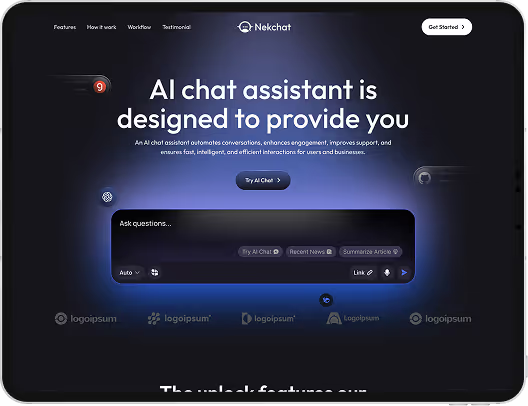
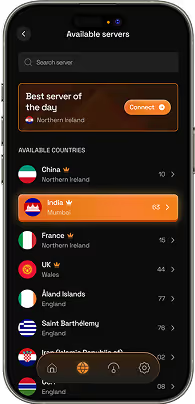
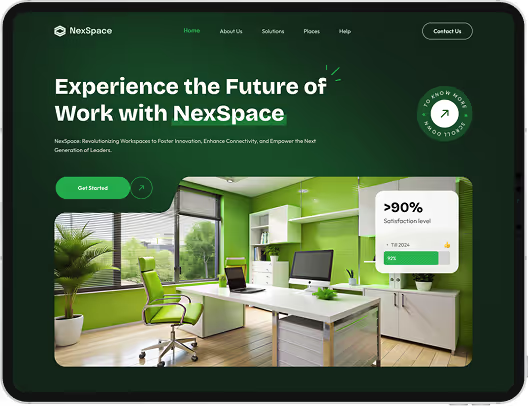
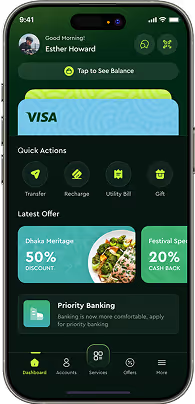
Booking website design covers the visitor side of taking appointments — how availability is displayed, the order of the steps, form length, mobile interaction and the confirmation.
Most often because details are requested before availability is shown, or because an empty calendar gives no next option. Both are sequence problems rather than field-count problems.
Only what is needed to hold the slot. Anything else can be collected later or at the appointment. Asked before a slot is chosen, even a short form loses people.
The next available slot, plainly stated, with the option of other days or a waiting list. An empty grid reads as broken and gives the visitor nowhere to go.
This covers what the visitor sees and does. Availability logic, double-booking prevention, reminders and calendar sync are covered by booking website development.
Still deciding if booking website design is right for you?
Talk to UsBooking flows are usually built in the order the business needs the information: identify the person, then the service, then find a time.
The visitor arrived with one question, and it is not about themselves. It is whether there is anything on Thursday afternoon. Everything else is administration they will happily complete once that answer is yes.
Asking for an email address before answering it inverts the whole exchange — and a meaningful share of people close the tab at exactly that point, before the site has learned anything at all about them.
Send us your booking flow. We will walk it on a phone and tell you where the sequence is costing you completed bookings.