
Genuine Only
We will not stage content and present it as customer material.
Customer content works because it reads as evidence rather than as a claim — which means it only works while it is genuine. UGC content strategy covers how to collect it, how to secure permission properly, and how to use it consistently, without the shortcut of producing content that merely looks like it came from customers.
Content presented as coming from customers must actually come from customers.
We will not stage content and present it as customer material.
Explicit rights, with scope and duration recorded.
Because the constraint is usually process, not willingness.
Social, product pages and ads, from one collection process.
Credit given, which also encourages more of it.
Four reasons, and all four depend on it being real.
Discuss Your Content →A claim from a customer is weighted differently from a claim from a brand.
Actual scale, actual color, how it looks in ordinary light.
Cheaper than continuous studio production, if there is a process.
And so is fake UGC, which costs more than it gains.
Collection, permission, and use across the places it helps.
Paid creator partnerships are covered by influencer marketing. Paid creator partnerships are influencer marketing; the same material strengthens ecommerce product page design.
Make asking easy, get permission right, use it everywhere it helps.
When and how customers are invited to share.
Explicit, documented, with scope and duration.
What genuinely helps, rather than everything received.
Social, product pages and ads where rights allow.
Credit given, which produces more.
A public post is not a license, and the assumption that it is causes genuine problems.
Explicit agreement covering where the content will be used, for how long, and whether it may appear in paid advertising — which is a separate and much larger permission than a social repost.
A hashtag or a tag is not consent. Neither is a public post. Someone photographing your product in their home retains rights over that photograph.
The practical approach is a short, clear request specifying the use, kept on record. Most people say yes; the ones who do not would have objected later at greater cost.
Because the entire value is that it did not come from the brand, and content produced by the brand to look otherwise is a claim about its own authorship.
Audiences are unusually good at spotting it — the lighting, the framing, the phrasing — and the recognition converts a credibility asset into evidence of dishonesty.
It is also the kind of thing that gets noticed publicly rather than privately. The downside is asymmetric and there is no version of it we will produce.



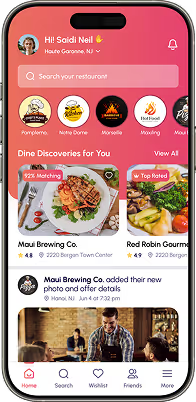

Brands run a campaign hashtag, customers use it, and the resulting photographs get reposted, put on product pages, and sometimes placed in paid advertising.
The reasoning is that the content was posted publicly with the brand's tag, which reads as an invitation. It is not one. The person who took the photograph still owns it, and paid use is a substantially larger permission than a repost.
Most people, asked directly, say yes. The ones who would have objected are precisely the ones you find out about after the advert has run.
Tell us how customers currently share content about you. We will design a collection process and get the permissions right.





UGC content strategy covers collecting genuine customer content, securing documented permission for its use, curating it and distributing it across social, product pages and paid where rights allow.